START WITH YOUR EXPERIENCE
You do not need the perfect diagnosis to begin.
You may not have the right words for what is happening yet. Start with what you notice in everyday life. Dizziness, poor balance, motion sensitivity, brain fog, visual overwhelm, fatigue, and feeling unlike yourself can all be meaningful clues.
What you are feeling is real, even when the reason is not obvious yet.
Which experience sounds most like yours?
You do not need the perfect diagnosis to begin. Start with the experiences that affect your everyday life.
ONE PIECE OF THE PATTERN
Dizziness is not just dizziness.
Dizziness can feel very different from person to person. Some people feel floating, pulled to one side, or simply never steady.
Even when imaging and routine testing are normal, those experiences are still real.
These experiences do not happen for no reason. The next step is understanding what may be contributing.
WHAT HAPPENS NEXT?
We use your experience as a starting point, then compare your story with objective measurements to investigate what may be contributing.
YOUR EXPERIENCE IS REAL
You're not imagining this.
You've probably heard things like:
Everything looks normal.
Your imaging is fine.
It might just be stress.
When you're still living with symptoms, those answers can leave you wondering if you're missing something.
Symptoms do not appear for no reason. Sometimes the answer is straightforward. Sometimes it takes careful detective work. Sometimes the right measurements simply have not been used yet.
Not having an explanation is not the same as not having a cause.
Many tests are designed to rule out serious disease, and that is important.
Understanding how your nervous system functions during balance, eye movement, and motion often requires different kinds of measurements.
When symptoms persist, the next question is often whether the things you notice may be connected in ways that are not immediately obvious.
The pattern may be connected
Your symptoms may be more connected than they seem.
It is common for dizziness, brain fog, visual overwhelm, fatigue, balance problems, and anxiety to appear together, not because they are separate conditions, but because the systems responsible for them constantly communicate. Looking at symptoms together often reveals patterns that are missed when each symptom is viewed in isolation.
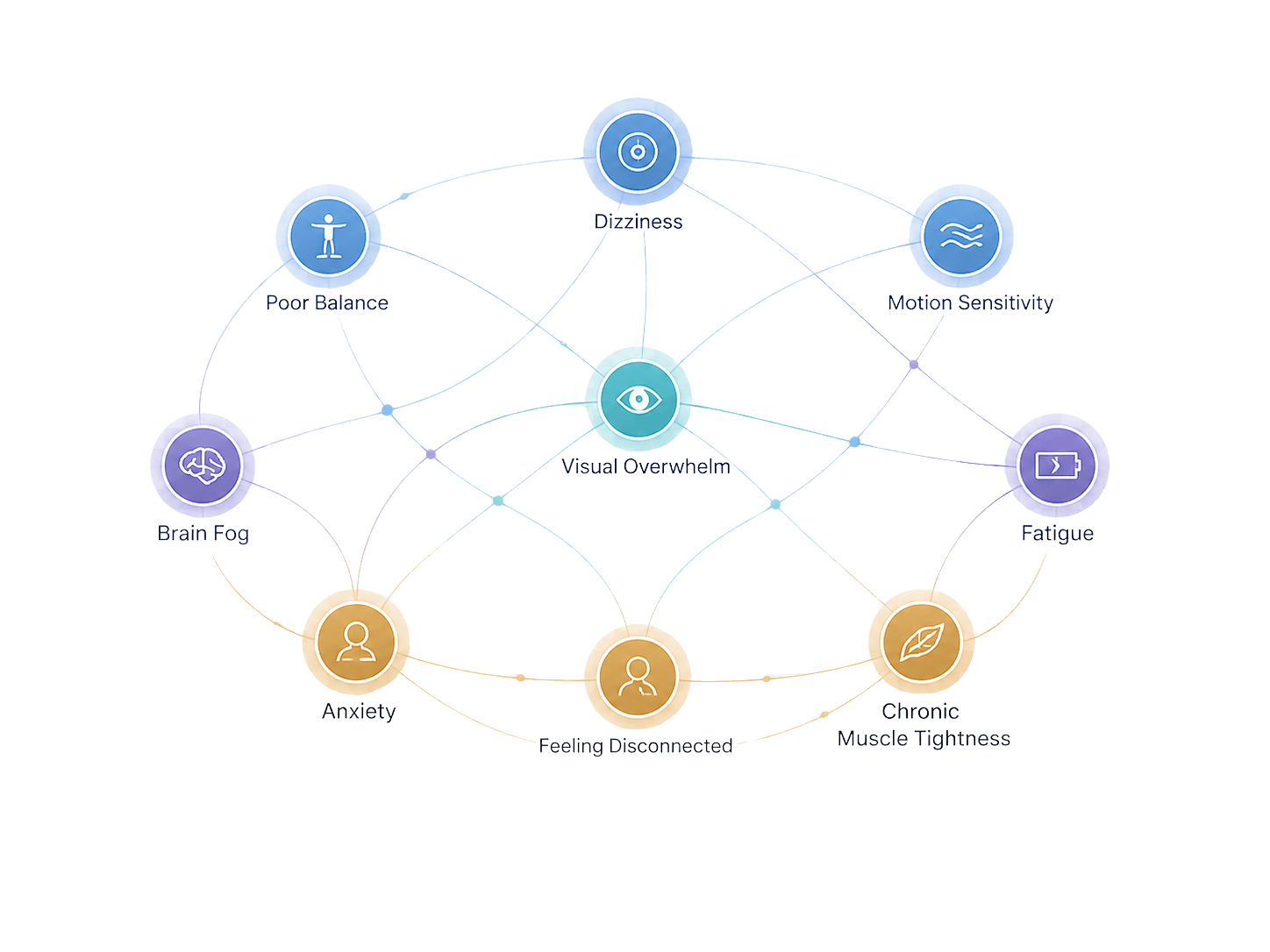
The goal isn't to chase ten different symptoms. It's to understand the pattern connecting them.
How we start finding answers
Every person's pattern is different.
Most people don't have one isolated symptom. They have a collection of clues. The goal is to understand how those clues fit together so we can investigate what may actually be driving them.
- 01
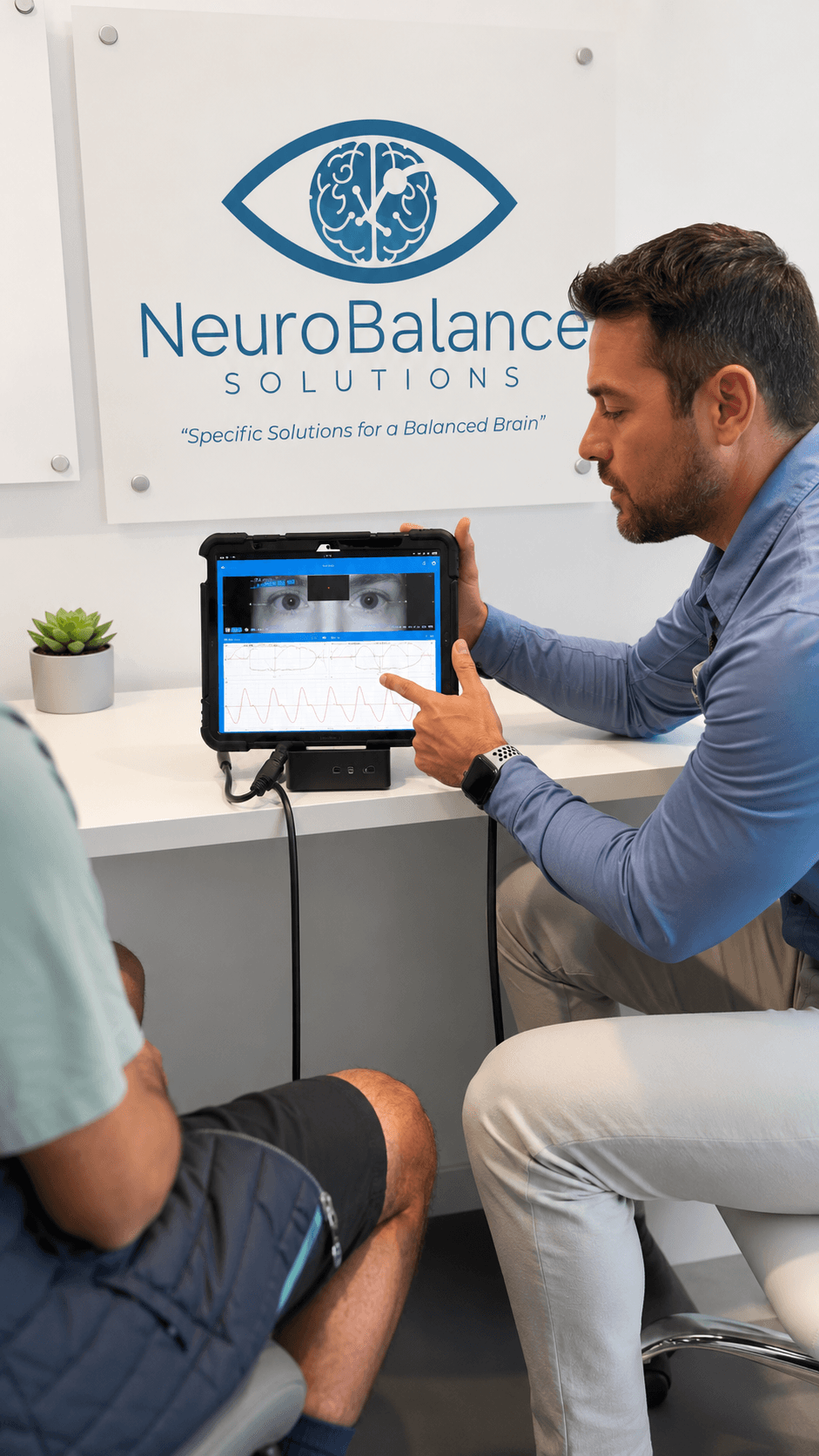
Measure what's actually happening
Eye movements, balance, timing, and movement patterns often reveal problems that symptoms alone cannot.
- 02
Connect the clues
We compare your history, symptoms, examination, and objective findings to understand how the pieces fit together.
- 03
Build the plan around you
Rehabilitation is built around what we measure, not around a generic diagnosis or protocol.
The goal isn't to collect diagnoses.
The goal is to figure out WHY it's happening in the first place.
Why the details matter
Your symptoms are giving us clues.
Persistent symptoms can feel unpredictable until we begin looking at when they happen, what makes them worse, and what changes them.
Feeling overwhelmed in a grocery store tells us something different from feeling unsteady in darkness. Symptoms that began after a concussion may create a different pattern than symptoms that appeared after an illness, a flight, or a period of intense stress.
These details do not provide the entire answer on their own, but they can help reveal which parts of the system deserve a closer look.
Environment
Where does it happen?
Busy stores, scrolling, driving, crowds, uneven ground, and darkness can each place different demands on the system.
Triggers
What changes it?
Head movement, visual motion, fatigue, stress, exercise, and changes in position may help reveal a more specific pattern.
Timing
When did it begin?
A concussion, illness, flight, sudden episode, or gradual progression can provide important context for understanding what came next.
You may already be asking
Some of the questions that bring people here.
If you've been searching for answers, you're not alone. These are some of the questions we hear most often from people experiencing dizziness, balance problems, concussion symptoms, brain fog, motion sensitivity, and so much more.
- Why Are All My Tests Normal If I Still Feel Terrible?
- Why do grocery stores make me dizzy?
- Why is my balance worse when I close my eyes?
- Can a concussion cause dizziness months later?
- Why do scrolling screens like social media make me dizzy?
- Why does driving make me dizzy?
- Can neck problems cause dizziness?
- Can certain foods make me dizzy?
Every person's story is different. If you don't see your question here, explore our learning library or reach out. You may be closer to an answer than you think.
You do not have to solve the whole puzzle before asking for help.
Start with what you are experiencing. We can help you determine whether objective assessment, in-person care, or virtual balance coaching may be an appropriate next step.